Class 7 | SST
Chapter 12 | Understanding Markets
Aligned with CBSE | NCERT | School & Olympiad Standards
Focus on What Matters Most
The67Sprint
🏪 What Is a Market?
- A market is any place — physical (haat, bazaar, mall) or online (an app or website) — where buyers and sellers meet
- Buyer and seller must agree on a mutually acceptable price for goods or services to be exchanged
- Not all markets trade physical goods — the share or stock market is a market too, where people buy and sell shares of companies
- Markets also connect people, traditions, and ideas, not just cash
- Domestic markets operate within India; international markets involve trade across borders
- Import means buying goods from other countries; export means selling goods produced in one country to another
🔗 The Chain of Markets
- Producer/Farmer grows or makes the goods first
- Wholesaler buys in bulk and stores goods in godowns or cold storage
- Distributor transports goods across long distances by truck
- Retailer sells small quantities directly to the final consumer
- Online version: Manufacturer → Aggregator warehouse → app order → doorstep delivery, skipping the physical chain
Wholesaler = Bulk
Retailer = Small Qty
⚖️ Demand, Supply & Government's Role
- Prices are decided by demand (what buyers want) and supply (what sellers offer) — never random
- Classic example: a guava seller settles on a price through bargaining that is neither too high for the buyer nor too low for the seller
- Government sets maximum prices on essentials like life-saving drugs to protect buyers
- Government guarantees Minimum Support Price (MSP) so farmers don't suffer losses, and sets minimum wages to protect workers
- Government mitigates harmful external effects like pollution — e.g. regulating a factory dumping dye into a river
- Government provides public goods like roads and parks that private shops wouldn't profitably build
Memory Cheat Code
"Whole-lot vs Detail" — Wholesaler buys the WHOLE lot in bulk; Retailer sells in small DETAIL-ed quantities to you.
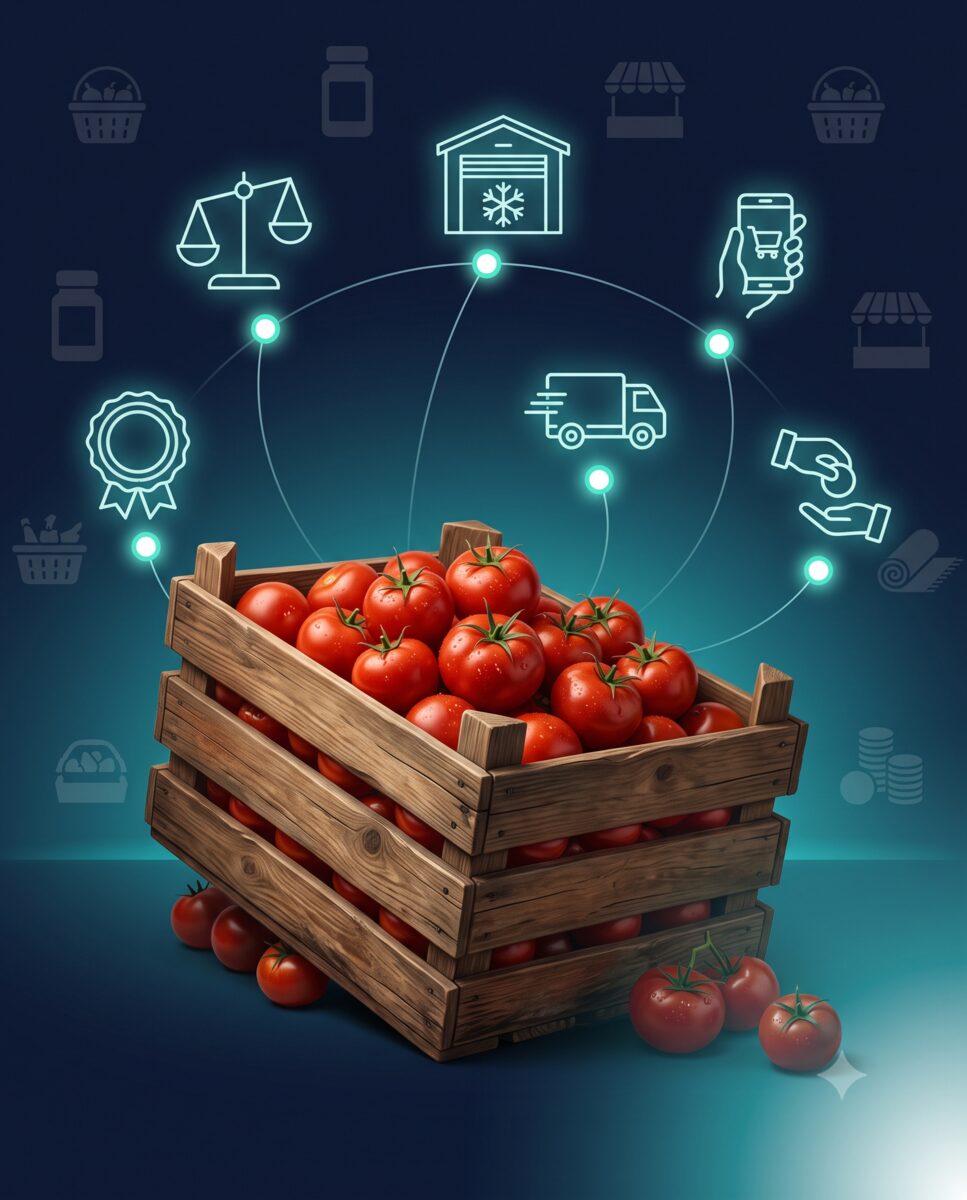
Quick Recall — Sprint Facts
Hampi Bazaar
A major 16th-century market hub in Karnataka
Surat's 1.5 Million
Artisans working in Surat's diamond cutting and polishing industry
Ima Keithel
A historic Manipur market run entirely by thousands of women
Refrigerator Signal
Consumer demand for fridges using less electricity pushes producers to make efficient models
Label Musts
Net Quantity, MRP, Batch Number, Ingredients, Best-Before date, Allergens
Four Certification Marks
FSSAI (food), ISI (appliances), AGMARK (agricultural produce), BEE (energy efficiency)
🔑 Key Terms
Wholesaler
A trader who buys goods in large, bulk quantities directly from producers and stores them in godowns
Retailer
A shopkeeper who sells goods in smaller quantities directly to the final consumer
Aggregator
An online app or platform that pools products from many sellers and coordinates warehousing and delivery
Public Goods
Essential services like roads and parks provided by the government for everyone
Import & Export
Import is buying goods from other countries; export is selling goods to other countries
Cold Storage
Specialized warehouses that keep perishable goods like tomatoes fresh and prevent waste
🏆 Olympiad & Challenger Edge
Market Equilibrium
The exact point where quantity demanded perfectly matches quantity supplied — zero shortage, zero surplus. Rarely stable in the real world.
Price Ceilings vs. Floors
A ceiling is a government-set maximum price protecting consumers; a floor is a guaranteed minimum price like MSP protecting producers.
Externalities & Monopoly
A negative externality hurts third parties not involved in a trade, like river pollution from a dye factory. A monopoly — one seller with no competition — can freely hike prices, so governments regulate it.
Kautilya's Ancient Fairness
The Arthaśāstra advised ghee sellers to give a little extra to make up for what sticks to the measuring pot — an early form of consumer protection.
❌ Wholesaler = Retailer?
No. Wholesaler buys the WHOLE lot in bulk for businesses; Retailer sells small DETAIL-ed quantities to consumers.
❌ Apps manufacture goods?
No. Online apps are Aggregators — they pool sellers' products and manage delivery, they don't make the goods.
❌ AGMARK on packaged chips?
Wrong. AGMARK is for raw agricultural produce. Packaged food needs FSSAI; appliances need ISI/BEE.
❌ Market = only a shop?
Incomplete. A full definition must include online spaces AND the core idea of buyers and sellers agreeing on a price.
🎪 The School Carnival
Running food and game stalls teaches pricing, inventory, cost calculation, and bargaining first-hand.
❄️ Buying a Refrigerator
Checking the BEE Star rating before buying ensures lower electricity bills and less environmental impact.
🏷️ Label Detective
Checking a soap or snack packet for MRP, FSSAI logo, ingredients, and best-before date is consumer awareness in action.
🥬 Evening Haat Bargaining
Watching a vendor drop vegetable prices late in the day shows real-time demand and supply at work before stock spoils.
🚨 Skipping the middle chain
Never draw Producer → Retailer → Consumer directly. The Wholesaler and Distributor must appear in between.
🚨 Only "better quality"
Don't stop there — name the actual non-price factors: cleanliness, packaging, convenience, and trust.
🚨 MRP is the price control?
MRP is a labelling law. The government's real price-control tool is setting maximum prices on essentials like medicines.
🚨 Mixing safety logos
FSSAI = packaged food. AGMARK = agricultural produce. ISI/BEE = appliances. Keep these three strictly separate.
Logic Chain — How a Product Reaches You
Step 1
A producer grows or manufactures the goods, which connects to a wholesaler buying it in bulk
Step 2
The wholesaler's bulk stock leads to a distributor transporting it across long distances by truck
Step 3
The distributor's delivery connects to a retailer stocking small quantities in a local shop
Step 4
The retailer's shelf leads to the consumer, who checks labels and certification marks before buying
🦉
Mentor Byte
"Be the product. Pick a snack from your shelf and trace its story backward — the farm it grew on, the wholesaler who bought it in bulk, the shop that sold it to you, and the FSSAI mark keeping you safe. Trace that path once, and markets stop being a chapter — they become the way you see every purchase you make."
Parent Tip
Next grocery run, hand your child the receipt and ask them to spot which items likely passed through a wholesaler versus a direct farm-to-shop route.