Class 7 | SST
Chapter 7 | The Gupta Era: An Age of Tireless Creativity
Aligned with CBSE | NCERT | School & Olympiad Standards
Focus on What Matters Most
The67Sprint
👑 Rise of the Gupta Empire
- Gupta dynasty emerged in the 3rd century CE after the Kushanas weakened, peaking 4th–6th century CE.
- Śrī Gupta founded the line; Chandragupta I expanded the empire and took the title Mahārājadhirāja (king of kings).
⚔️ Samudragupta & Chandragupta II
- Samudragupta expanded the empire; his conquests are recorded in the prayāga praśhasti (Allahabad Pillar Inscription) by court poet Harisena.
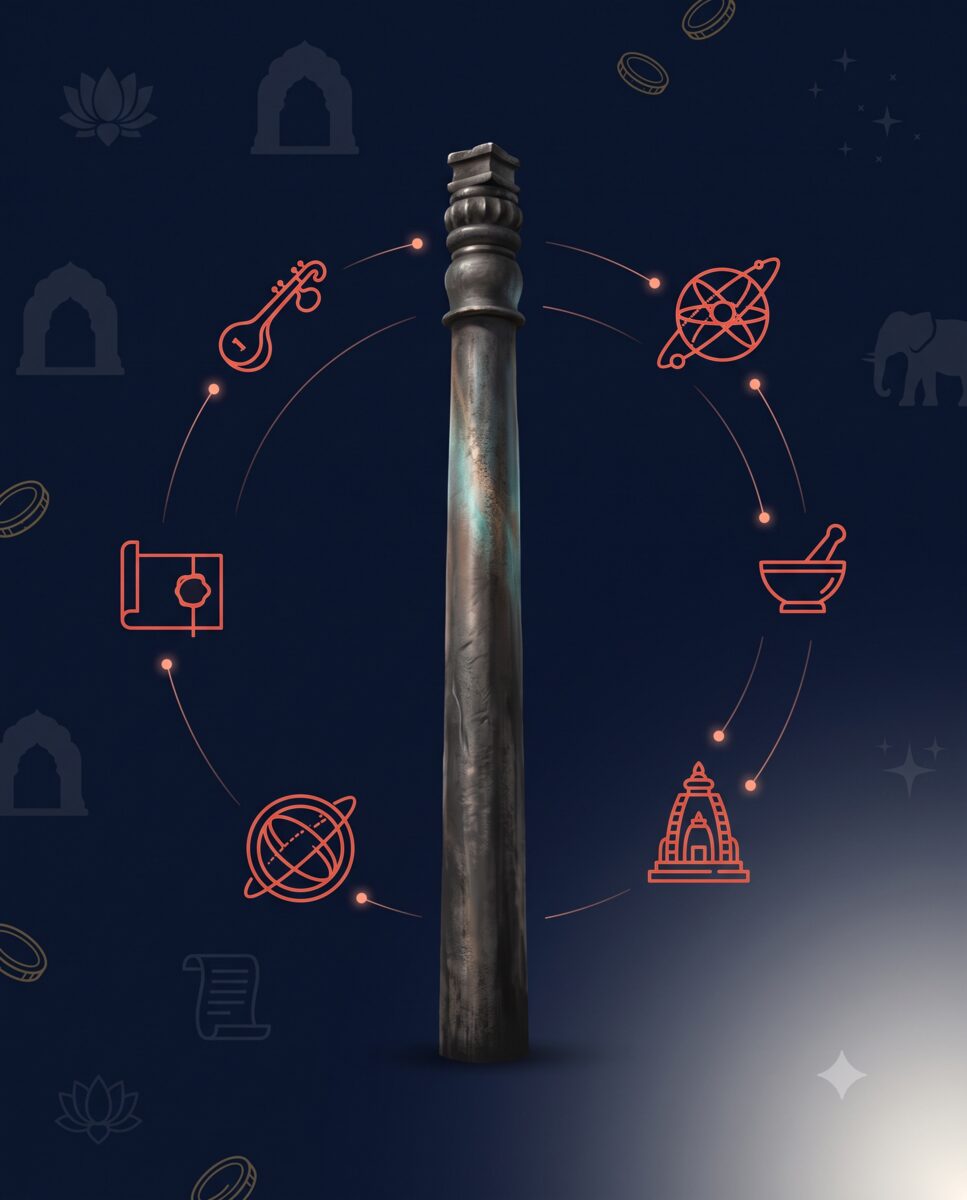
- Chandragupta II (Vikramāditya) defeated the Śhaka Kshatrapas and secured western sea ports; associated with the rust-resistant Iron Pillar at Mehrauli.
Samudragupta
Vikramāditya
🏛️ Administration
- The empire was centrally ruled but divided into provinces governed by officials called Kumaramatyas.
- Local administration was managed by village assemblies known as Sabhas.
- Land grants to priests and chieftains were recorded on copper plates (tamrapatra).
🧳 Faxian's Account
- Chinese Buddhist traveller Faxian described a peaceful, prosperous society with free hospitals run by wealthy merchants.
- He also noted harsh discrimination against the chanḍālas (outcastes), who lived outside city limits.
🔬 The 'Classical Age'
- Āryabhaṭa (Āryabhaṭīya) proved the Earth rotates on its axis and calculated eclipses and the solar year.
- Varāhamihira (Bṛhat Saṁhitā) covered astronomy, weather, and architecture.
- Kālidāsa wrote literary classics like Meghadūta; Ayurveda was codified in the Charaka and Suśhruta Saṃhitā.
🏺 Art & Architecture
- Ajanta cave paintings depicting Jataka tales; Dashavatara temple at Deogarh.
- Buddha sculptures from the Sarnath and Mathura schools of art.
📉 Decline & Contemporary Kingdoms
- The empire weakened by the 6th century CE due to Hūṇa (Hun) invasions and internal conflicts.
- Contemporary kingdoms: Vākāṭakas (central India), Pallavas (Kanchipuram, south), Kāmarūpa (Varman dynasty, northeast).
Memory Cheat Code
C-S-C = Chandragupta I → Samudragupta → Chandragupta II — the three key Gupta rulers in order of succession.
Quick Recall — Sprint Facts
Timeline
4th to 6th Century CE
Key Inscription
Prayāga praśhasti by Harisena
Famous Artifact
6-tonne rust-resistant Iron Pillar, Mehrauli
Education Hub
Nālandā University, Gupta-patronised
Numismatics
Samudragupta shown playing the veena on gold coins
Regent Ruler
Prabhāvatī Gupta ruled Vākāṭaka kingdom as regent
🔑 Key Terms to Know
Mahārājadhirāja
Grand royal title meaning 'king of kings', asserting supreme authority.
Prayāga Praśhasti
Pillar inscription in Prayagraj celebrating Samudragupta's achievements.
Tamrapatra
Copper plates recording land grants to priests and chieftains.
Chanḍālas
Outcastes forced to live outside city limits, facing severe discrimination.
🏆 Olympiad & Challenger Edge
Administrative Hierarchy
The empire was divided into massive provinces called bhuktis (managed by uparikas), further split into districts called vishayas (managed by vishayapatis).
Iron Pillar Chemistry
Rust resistance comes from a high-phosphorus, low-sulfur composition forming a passive film of iron hydrogen phosphate hydrate.
Āryabhaṭa's Precision
Calculated the solar year as 365.258 days — a deviation of only ~0.0044% from the modern value. Also calculated π as 3.1416.
The Feudal Paradox
Land grants (tamrapatra) stripped the state of direct tax revenue, empowering regional samantas who eventually broke away.
Chandragupta Mix-up
Don't confuse Chandragupta Maurya with Chandragupta I/II of the Gupta dynasty — always state "of the Gupta dynasty" and the numeral.
One-Sided "Golden Age"
Don't paint the era as flawless — always mention Faxian's account of the chanḍālas to show social inequality alongside prosperity.
Mixing Up Scientists
Āryabhaṭa = mathematics/astronomy (Earth's rotation, π). Varāhamihira = encyclopedic polymath (weather, architecture, astrology).
Rust-Proof Engineering
The Mehrauli Iron Pillar's 1,600-year rust resistance still guides modern research into corrosion-proof metals for bridges and buildings.
Modern Calendars
Āryabhaṭa's solar year calculation underlies why we add a leap day every four years — a cosmic fix he worked out 1,500 years ago.
Everyday Ayurveda
Turmeric milk or ginger tea for a cold traces back to the Charaka and Suśhruta Saṃhitā, codified during the Gupta period.
Incomplete Map Labeling
Distinguish the core Gupta territory from tributary states like the Vākāṭakas or Pallavas — mixing them up costs map marks.
Sanskrit Spelling Errors
Practice writing Abhijñānaśākuntalam, Bṛhat Saṁhitā, and prayāga praśhasti carefully — examiners penalize misspellings.
Vague Decline Answers
"The empire fell" is not enough — always name the Hūṇa invasions and the rise of independent regional feudatories.
Logic Chain
Step 1
Control of Arabian Sea ports and Silk Route trade brings massive wealth into the empire.
Step 2
Royal patronage funds scholars and artists, sparking the 'Classical Age' of science, literature, and art.
Step 3
Land grants (tamrapatra) decentralise power, while Hūṇa invasions drain the royal treasury.
Step 4
The weakened central government collapses, and the empire fragments into regional kingdoms.
🦉
Mentor Byte
Treat the Gupta era as a brilliant, flawed turning point — not a checklist. Contrast the grand claims of Harisena's praśhasti with the ground-level realities Faxian recorded, and ask how a land grant on copper could quietly plant the seeds of an empire's fall.
Parent Tip
Ask your child: "How does Āryabhaṭa's math still show up in a calendar today?" — connecting ancient science to daily life builds lasting recall.