Class 6 | Science
Chapter 2 | Diversity in the Living World
Aligned with CBSE | NCERT | School & Olympiad Standards
Focus on What Matters Most
The67Sprint
🌱 Sorting Plants by Stem
- Herbs: small plants with soft, green, tender stems — mint, tomato
- Shrubs: medium, bushy plants with hard woody stems branching near the ground — rose, hibiscus
- Trees: tall plants with one thick, hard, woody trunk — mango, banyan
- Climbers: weak stems that need support to grow upward — money plant
- Creepers: weak stems that spread along the ground instead — pumpkin, watermelon
Herb 🌿
Tree 🌳
🔍 The Dicot vs Monocot Cheat Code
- Dicot seeds split into two cotyledons — pairs with a single thick taproot
- Dicot leaves show reticulate venation — a net-like pattern of veins
- Monocot seeds have only one cotyledon — pairs with a bushy fibrous root system
- Monocot leaves show parallel venation — straight, train-track veins
- Spot the leaf pattern and the root and seed type follow automatically
Chickpea 🫘
Wheat 🌾
🔬 What Makes Something "Living"?
- Living things need food for energy and to grow
- They respire (breathe) and excrete waste
- They respond to their surroundings and can move
- They reproduce to create more of their own kind
- A subject must do ALL of these to count as truly living
Memory Cheat Code
Net-like veins = Taproot = Dicot. Straight parallel veins = Fibrous roots = Monocot. The two teams never mix.
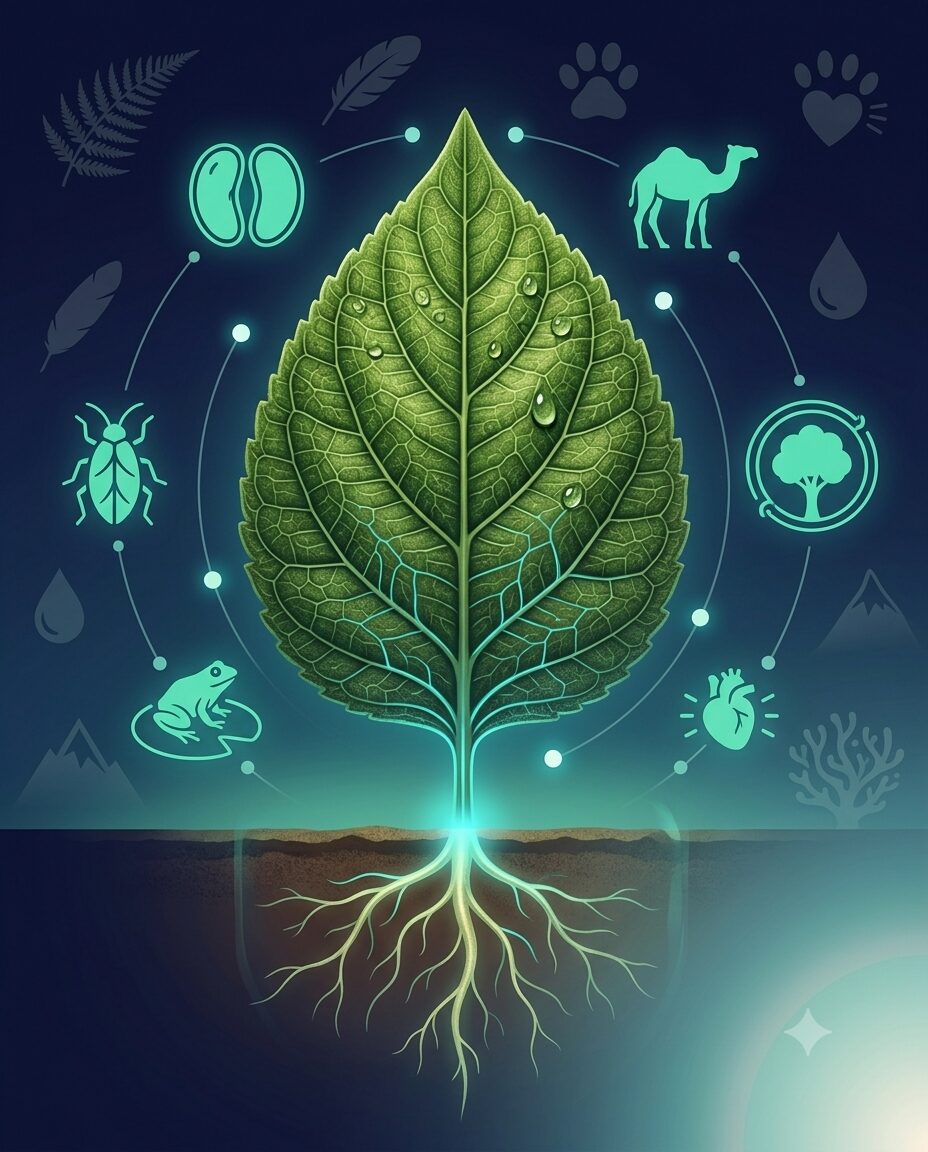
⚡ Sprint Facts — Diversity in the Living World
Habitat vs Adaptation
Habitat is the address; adaptation is the survival tool
5 Plant Types
Herbs, Shrubs, Trees, Climbers, Creepers — sorted by stem
2 Unbreakable Teams
Dicot+Taproot+Reticulate vs Monocot+Fibrous+Parallel
7 Signs of Life
Grow, respire, excrete, reproduce, respond, need food, move
Camouflage
Mimesis and disruptive coloration help animals blend in
Project Tiger — 1973
Plus the 2022 Cheetah Reintroduction Project
🔑 Key Terms
Biodiversity
The vast variety of plants, animals and microorganisms and how they interact in an ecosystem
Habitat
The natural environment where an organism lives — e.g. desert, ocean, forest
Adaptation
A physical feature or behaviour that helps an organism survive in its habitat
Venation
The pattern of veins in a leaf — reticulate (net-like) or parallel (straight lines)
Cotyledon
The seed leaf inside a seed — dicots have two, monocots have only one
Camouflage
Blending into surroundings using colour, patterns or mimicry to hide or hunt unseen
🏆 Olympiad & Challenger Edge
Mimesis & Disruptive Coloration
Stick insects and the oakleaf butterfly mimic twigs and dead leaves, while tigers use stripes to break up their outline in the shadows of the jungle.
Naming Every Living Thing
Carl Linnaeus founded taxonomy over 250 years ago, giving every species a two-part scientific name — so a tiger is Panthera tigris everywhere on Earth.
The Detective Botanist
Spot a leaf with net-like veins and you can name its root system and seed type without ever digging up the plant or seeing a single seed.
Camouflage Isn't Just for Hiding
Predators camouflage too — not only to hide from danger, but to sneak up on prey completely unseen before they strike.
❌ Biodiversity = Animals Only?
No. Biodiversity equally covers plants and microorganisms, which keep the whole ecosystem balanced.
❌ A Moving Car Is Alive?
Wrong. It uses fuel and moves, but it cannot grow, reproduce or respire — so it fails the living test.
❌ Fibrous Roots + Net Veins?
Classic mix-up. Fibrous roots always pair with parallel venation — never with a reticulate, net-like pattern.
❌ Habitat = Adaptation?
No. The ocean is the habitat — a fish's gills and fins are the adaptations that let it survive there.
🐅 Project Tiger & Cheetahs
India launched Project Tiger in 1973 to save the Bengal tiger, followed by the 2022 Cheetah Reintroduction Project.
🌳 Sacred Groves
Communities across India protect patches of forest as Sacred Groves, keeping them undisturbed for generations.
🌾 Roots That Save Soil
Farmers value fibrous-rooted plants like grass because the tangled roots hold topsoil together and prevent erosion.
🐦 Salim Ali's Trick
Spot webbed feet on a bird and you know it swims; non-webbed feet mean it perches — no textbook needed.
🚨 Habitat ≠ Adaptation
Habitat is the address. Adaptation is the survival tool. Keep the two apart in every answer.
🚨 Climber vs Creeper
Climbers climb up using support, like a money plant. Creepers spread flat along the ground, like a pumpkin vine.
🚨 Mismatched Plant Traits
Never pair fibrous roots with reticulate venation on a paper. Team Dicot and Team Monocot never mix.
🚨 "It Moves, So It's Alive"
Check every criterion. Clouds and cars move but cannot grow, reproduce or respire — so they are non-living.
🔗 Logic Chain — Leaf-to-Root Deduction
Step 1 — Look at the Leaf
Check whether the veins form a branching net or run in straight, parallel lines
Step 2 — Read the Venation
Net-like veins are reticulate venation; straight lines are parallel venation
Step 3 — Deduce the Root
Reticulate venation means a taproot below; parallel venation means fibrous roots
Step 4 — Confirm the Seed
Taproot plants grow from dicot seeds; fibrous-root plants grow from monocot seeds
🦉
Mentor Byte
"Don't just memorise nature, decode it. The living world isn't a random list of facts — it's a puzzle where every feature exists for a reason. See a plant with net-like leaf veins? Don't just recall 'taproot' — ask why the two always travel together. Once you connect habitat to adaptation and leaf to root, you stop memorising and start predicting."
💛 Parent Tip
On your next walk, pick up a fallen leaf and ask your child to guess its root type from the vein pattern alone — then dig a little to check. This hands-on game locks in the reticulate-taproot and parallel-fibrous pairing far better than flashcards.