Class 7 | English
Chapter 4 | Animals, Birds, and Dr. Dolittle
Aligned with CBSE | NCERT | School & Olympiad Standards
Focus on What Matters Most
The67Sprint
🩺 People's Doctor to Animal Doctor
- Dr. John Dolittle of Puddleby-on-the-Marsh began as a "people's doctor"
- Animals — hedgehogs, mice and more — filled his clinic and waiting room
- He lost his human patients, and his sister Sarah complained about the mess and the lost income
- Matthew Mugg, the Cat's-meat-Man, saw that Dolittle understood animals far better than ordinary vets and urged him to treat animals
🦜 Polynesia & Animal Languages
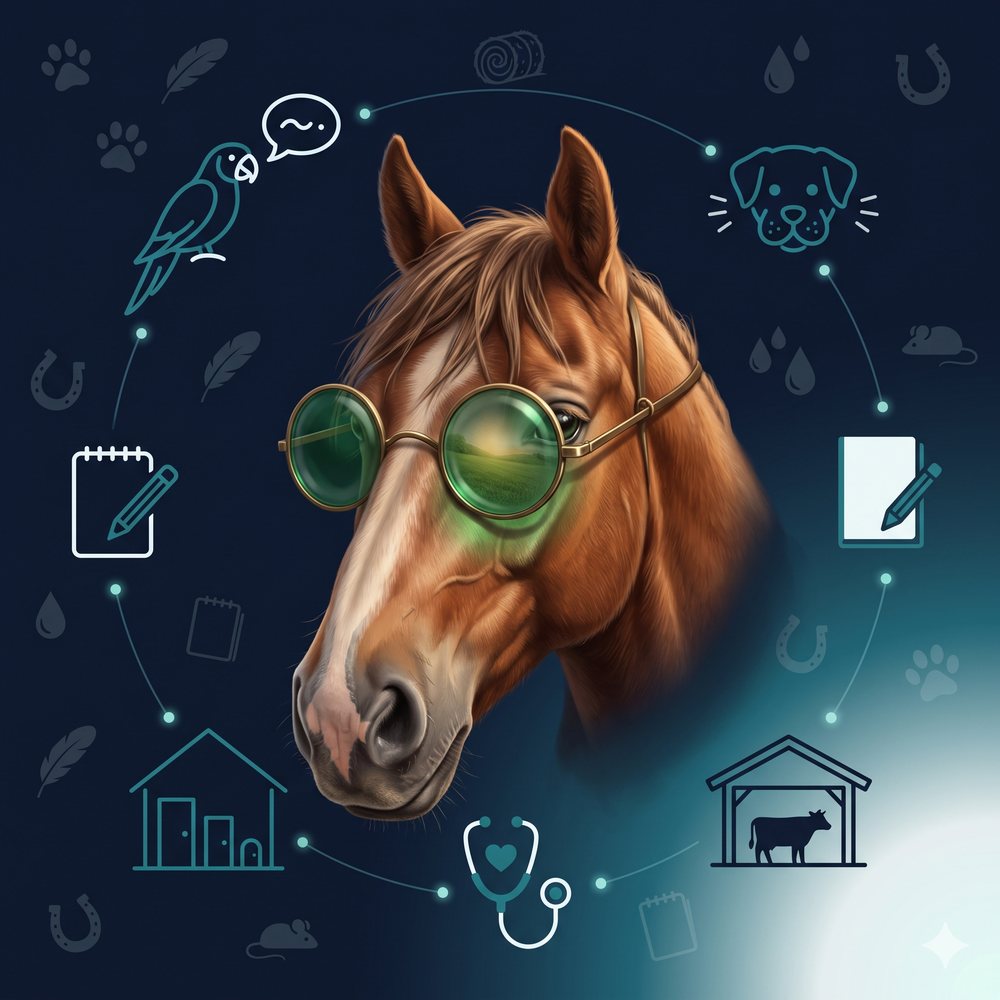
- Polynesia, Dolittle's ancient grey parrot (182 years old), revealed that animals talk through sounds AND body language
- Example: a dog twitching its nose is asking "Has it stopped raining?"
- On a rainy afternoon at the kitchen table, she taught him the "A, B, C of bird language"
- Dolittle eagerly wrote the bird words in his notebook with a pencil
👓 Right Diagnosis, Busier House
- Ordinary vets prescribed pills without understanding the animal
- Dolittle found that a plough horse going blind in one eye only needed green spectacles to cut the glare while ploughing
- Migrating birds carried his fame across the world
- He added doors marked 'HORSES', 'COWS' and 'SHEEP', plus a special tunnel for mice
✏️ Grammar — Present Perfect
- Structure: Subject + has/have + past participle (V3)
- Shows a completed action with a link to the present
- Chapter examples: has learnt, has treated, has taught, has written, have brought, has become
has / have + V3
📝 Writing — Notice
- A short, formal announcement of about 50 words
- Format: Organization, NOTICE, Date, Heading, Body (Date / Time / Venue), Designation
- Always frame it inside a neat rectangular box
≈ 50 words
Boxed 📦
🎧 Listening — Clinic Details
- Dr. Dolittle's clinic: 12 Rose Lane, Woodstock
- Open Monday to Friday, 9:00 AM – 5:00 PM
- Special bird session: Saturday, 11:00 AM – 2:00 PM
🐄 Culture & Animal Welfare
- Goshala = go (cow) + śālā (shed/hall)
- Ancient Indian veterinary texts: Charaka Samhita, Sushruta Samhita, Harita Samhita
- Caring for strays means food and water, shelter, and adoption
Memory Cheat Code
One = has, Many = have. Doctor Dolittle has learnt; animals have brought news — always followed by V3.

Quick Recall — Sprint Facts
Protagonist
Dr. John Dolittle, M.D.
Location
Puddleby-on-the-Marsh, West Country, England
Key Human Ally
Matthew Mugg, the Cat's-meat-Man
Primary Animal Mentor
Polynesia, Grey Parrot, aged 182/183 years
Household Pets
Dab-Dab (duck), Jip (dog), Gub-Gub (baby pig), Too-Too (owl), white mice in the piano, rabbits in the pantry
First Bird Translation
"Ka-ka oi-ee, fee-fee?" → "Is the porridge hot yet?"
Famous Treatment
Green spectacles for a plough horse struggling with sunlight
Clinic Alteration
Species doors ('HORSES', 'COWS', 'SHEEP') and a mouse tunnel
Listening Skill Data
Clinic at 12 Rose Lane, Woodstock
Etymology
Goshala = go (cow) + śālā (shed)
🔑 Key Terms
Veterinarian (Vet)
A qualified medical practitioner who treats diseased or injured animals
Body Language (Kinesics)
Non-verbal communication through posture, gestures and facial expressions — e.g. tail-wagging, nose twitching
Spectacles
Eyeglasses used to correct defective vision or protect eyes from bright glare
Ploughing
Turning over soil with a farm implement before sowing seeds
Notice
A formal, concise written announcement meant to give important information to a target group
Present Perfect Tense
A verb form for an action completed before now but linked to the present (Subject + has/have + V3)
Goshala
An Indian shelter or sanctuary dedicated to the housing and care of cows
🏆 Olympiad & Challenger Edge
Do Real Animals Have "Languages"?
Lofting's bird language is imaginative, but real-world ethology shows animals use complex "discourse systems". Vervet monkeys give distinct alarm calls for eagles, leopards and snakes.
Bioacoustics & Machine Learning
Scientists now use bioacoustics and machine learning to decode vocal signatures — such as individual "names" in elephant herds.
❌ Polynesia spoke only human words?
Wrong. She was bilingual — human language to humans, bird language ("Ka-ka oi-ee, fee-fee?") to birds.
❌ The horse needed pills?
No. It was going blind from sunlight glare and needed green spectacles, not medicine.
❌ "has learned … yesterday"
Present Perfect takes no specific past time word. Write "learned bird language yesterday" OR "has learned bird language".
❌ Notice with no box
Always draw a neat four-sided box and keep the body to about 50 words.
❌ Dolittle disliked people?
No. Animals crowded his waiting room and drove human patients away — he did not quit out of dislike or failure.
❌ He knew animal speech by instinct?
No. Polynesia taught him step by step, and he recorded the words in a notebook.
🐕 Decode Your Pet
A wagging tail or a purring cat is body language telling you about hunger, happiness or worry.
🕶️ Gear for Working Animals
Sun visors, equine boots and animal prosthetics are like Dolittle's green spectacles — protection that fits the animal.
🎯 Fix the Root Cause
Dolittle gave spectacles, not pills. Find the real cause first — e.g. adjust lighting or rest tired eyes before reaching for medicine.
📢 Notices That Work
Draft a boxed, ~50-word notice for a school board about a pet adoption drive or a health check-up.
🐄 Help Strays, Visit a Goshala
Set up food and water stations, report injured wildlife to local shelters, and support adoption drives.
🚨 Missing Notice Box
CBSE evaluation deducts 1 mark automatically if the Notice is not framed inside a distinct box.
🚨 Notice Header Layout
Organization name, the word NOTICE, Date and Heading must follow a clear vertical layout.
🚨 Missing Value Points
"Why did Dolittle become famous?" needs all four: (1) learning animal language, (2) direct patient diagnosis, (3) empathy and individual attention, (4) news spread by migrating birds.
🚨 Has vs Have
Use has with singular subjects (Doctor Dolittle, Polynesia) and have with plural subjects (Animals, People).
Logic Chain — How Dolittle Became the Animal Doctor
Step 1
Animal clutter in the waiting room drives away his human patients, which leads Matthew Mugg to suggest he become an animal doctor
Step 2
The new plan needs animal language, which connects to Polynesia revealing that animals use sounds and body signals
Step 3
Polynesia's "A, B, C" lessons at the kitchen table, noted in his notebook, lead to listening to patients directly and spotting the plough horse's glare problem
Step 4
Green spectacles work, so migrating birds spread his fame worldwide, which leads him to build species doors and a mouse tunnel
🦉
Mentor Byte
"Treat this chapter as two skills in one: understanding character and mastering structure. Notice the contrast in Dr. Dolittle's life — he loses money, yet gains deep fulfilment from understanding animals. For grammar, take sentences from the story and rewrite them in different tenses until has/have + V3 feels natural. And for Notice Writing, memorise the exact CBSE format — the box, the header order, the 50-word limit — because those are the easy marks."
For Parents
Watch your pet together for five minutes and ask your child to "translate" its body language into a sentence. Then have them write a boxed, 50-word notice for a family event at home — a fun way to practise both observation and the Notice format.