Class 7 | SST
Chapter 7 (Pt II) | Infrastructure: Engine of India's Development
Aligned with CBSE | NCERT | School & Olympiad Standards
Focus on What Matters Most
The67Sprint
🏗️ What is Infrastructure?
- Infrastructure is the basic systems and structures that keep cities and villages functioning smoothly, connecting people to opportunities
- It is the "engine" of development — boosting trade, helping farmers and factories, enabling fast disaster response, and strengthening national security
- Physical Infrastructure: tangible structures — transportation (roads, railways, airports, ports), utilities (electricity, water), communication networks, energy (windmills, dams, solar parks)
- Social Infrastructure: facilities for wellbeing, safety, justice and recreation — schools, hospitals, police stations, courts, fire stations, parks, libraries, community centres
🚛 Satish's Value Chain
- Infrastructure never works alone — a tomato farmer like Satish depends on a full chain to succeed
- Canals/electric pumps (utilities) → Highways (transport) → Cold Storage (preservation) → Internet (market prices)
- If just one link breaks — say, a cyclone knocks out the power grid — cold storage fails, the harvest rots, and no goods reach the truck or the market
🌱 Sustainable & Inclusive Infrastructure
- Sustainable: reduces environmental harm — solar panels (Cochin International Airport), wind energy (Muppandal Wind Farm, Tamil Nadu), animal warning systems near railway tracks
- Inclusive: accessible to all — ramps, tactile paths, and accessible transit for children, the elderly, and persons with disabilities
- A complete answer on "sustainable infrastructure" must cover both halves — eco-friendly AND inclusive
Memory Cheat Code
Physical moves things; Social builds people. Roads/rail/internet move goods, people, data. Schools/hospitals/courts build health, knowledge, safety.
Quick Recall — Sprint Facts
2nd Largest
India's road network rank in the world (2024)
1853
Year the British introduced railways in India
20 Million+
Passengers Indian Railways carries every single day
11,100 km
India's coastline — 12 major ports, 217 minor ports
3rd Highest
India's domestic air traffic rank globally — ~376 million passengers (2024–25)
16m / 8m / 2.5m
Arthashastra road widths — royal highway / forest road / chariot road
Key Terms
Infrastructure
The basic systems and facilities that help a country function smoothly
TEU
Twenty-foot Equivalent Unit — the standard unit used to measure shipping container capacity and port activity
E-commerce
Buying or selling products and services online
E-governance
Using communication technology to deliver government services, like accessing documents on DigiLocker
Port
A place along a coast where ships load and unload goods
Sustainable Infrastructure
Infrastructure that supports development while minimising environmental harm
Olympiad & Challenger Edge
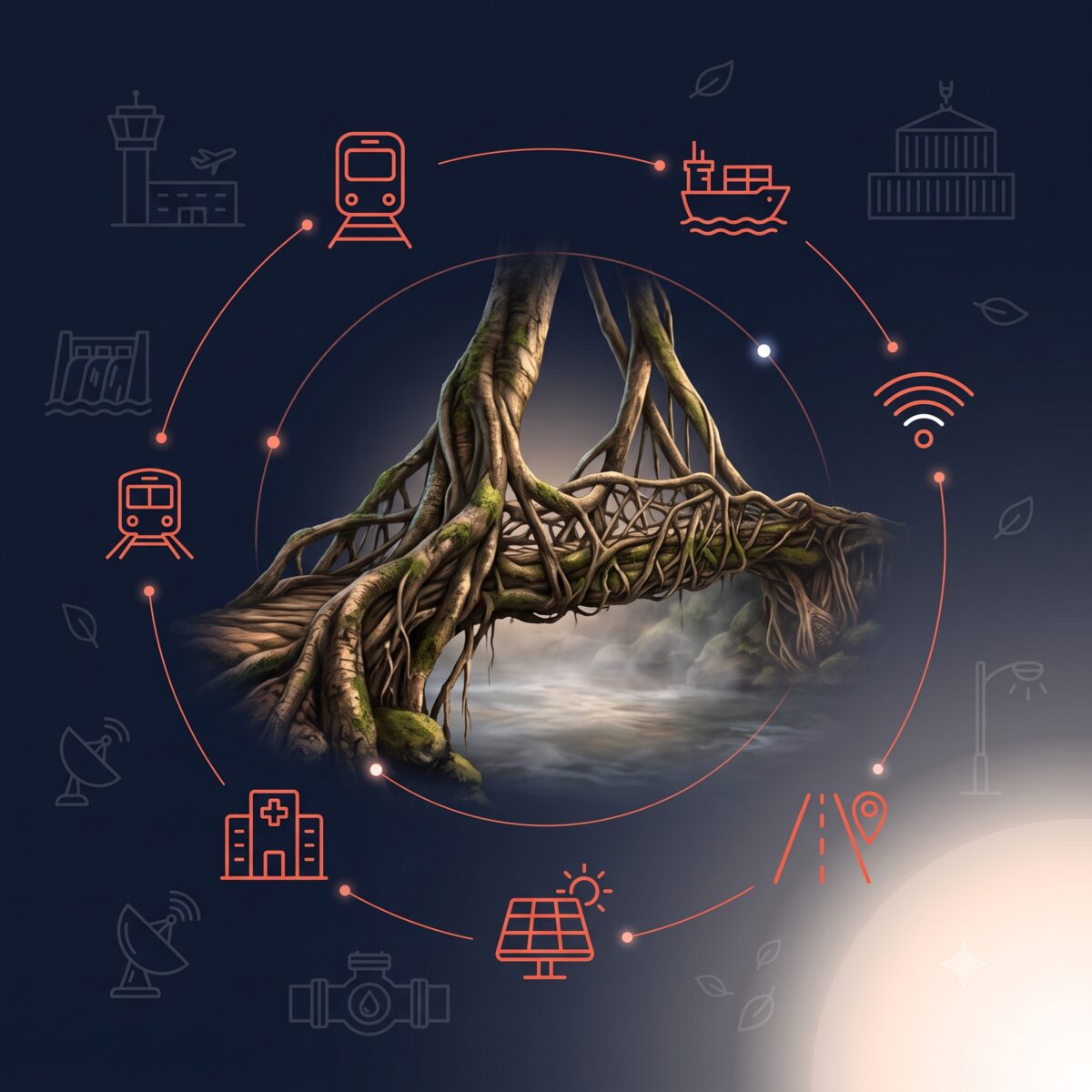
Living Root Bridges
In Meghalaya, the Khasi and Jaintia tribes guide the roots of the rubber tree (Ficus elastica) into jingkieng jri — self-repairing, flood-proof bridges that take decades to grow but can last centuries.
Value Chain Ripple Effect
A power grid failure knocking out cold storage doesn't just spoil one harvest — it ripples outward into food scarcity in distant cities and income loss for rural farmers.
Colonial vs. Post-Independence Design
Colonial infrastructure was built extractively — moving raw materials out of India to ports for the British. Post-independence infrastructure is built integratively — connecting rural villages to domestic markets.
Arthashastra & the Saptanga Link
Kautilya's Arthashastra connects infrastructure to statecraft — durg (fortified capital) and kosh (treasury secured through trade routes) as pillars of a state's sovereignty.
❌ Infrastructure = transport only?
No. Always include utilities (electricity/water) and communications (internet/towers) alongside transport in any full answer.
❌ Hospitals = Physical Infrastructure?
Wrong instinct. Even though it's a building, a hospital builds human health — so it's Social, not Physical.
❌ Sustainable = eco-friendly only?
Incomplete. A top-tier answer must also mention inclusive design — ramps and access for the elderly and disabled.
❌ "Be a good citizen" as an answer?
Too vague. Use specific actions: avoid littering, stop vandalism, and report potholes or broken streetlights to authorities.
📱 UPI & DigiLocker
Paying with UPI or downloading your Aadhaar card via DigiLocker are everyday examples of communication infrastructure and e-governance in action.
🌉 Dhola Sadiya Bridge
Spanning 9.15 km over the Lohit river in Assam, it replaced unreliable ferries and cut travel time by 4 hours — even during severe floods.
✈️ Kempegowda "Garden Terminal"
Bengaluru's airport blends bamboo structures and indoor plants with high-tech design, proving infrastructure can be sustainable and beautiful.
🚆 Railway Electrification
Indian Railways is aiming for 100% electrified trains — cutting coal and diesel use and sharply reducing air pollution from transport.
🚨 Missing the "why" in full
"Why is infrastructure the engine of development?" needs BOTH economic activity (trade/jobs) and daily life (health/education) — one alone loses marks.
🚨 Forgetting Arthashastra
Questions on ancient Indian infrastructure expect Kautilya's Arthashastra by name, plus the penalties for damaging public works like reservoirs.
🚨 Skipping TEU in port questions
Port/shipping questions expect the term TEU (Twenty-foot Equivalent Unit) as the standard measure of container capacity.
🚨 Narrow "Social Infrastructure"
Don't limit it to schools and hospitals — it also covers safety, justice, and recreation: police stations, courts, and parks.
Logic Chain — How Infrastructure Powers a Farmer's Harvest
Step 1 — Water Management
Canals and electric pumps connect to reliable irrigation, giving crops the water they need to grow
Step 2 — Crop Preservation
Reliable electricity connects to working cold storage, which leads to preventing spoilage after harvest
Step 3 — Digital Connectivity
Internet access connects to real-time market prices, leading the farmer to choose the best place to sell
Step 4 — Physical Transport
Highways connect the farm to the city fast, leading to fresh produce reaching markets and real income for the farmer
🦉
Mentor Byte
"Don't let students memorise roads, ports, and cables as separate lists. Teach the domino effect instead. Ask them: if the power grid fails, what happens to the internet? If the internet fails, what happens to the bank? If the bank fails, how does the factory buy materials? Once a student sees infrastructure as one interconnected web, they stop memorising facts and start understanding economics."
For Parents
Next time you're stuck in traffic or your internet drops, ask your child which piece of infrastructure just failed, and what else depends on it. It turns a frustrating moment into a real lesson.