Class 6 | Science
Chapter 1 | The Wonderful World of Science
Aligned with CBSE | NCERT | School & Olympiad Standards
Focus on What Matters Most
The67Sprint
🔍 Science & Curiosity
- Science is a way of thinking and exploring the world to understand how things work
- It all begins with curiosity — being eager to learn and ask questions
- To be a wise person, you must be a "whys" person
- Science is like a giant, unending jigsaw puzzle — every discovery is one more piece
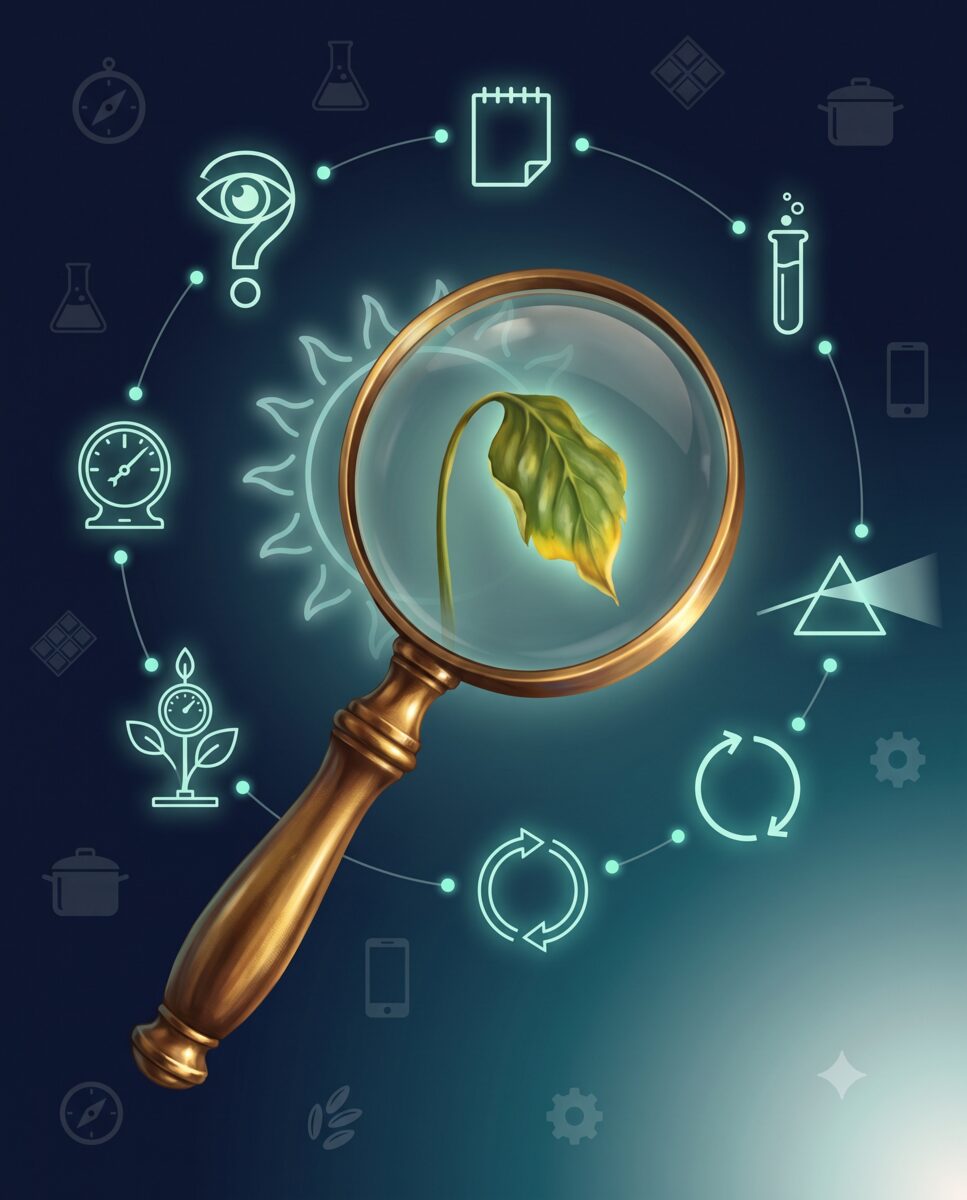
🧪 The Scientific Method — 4 Steps
- Asking Questions — observing your surroundings and wondering "Why?"
- Making a Guess — forming a hypothesis, a possible explanation
- Testing the Guess — running an experiment to try it out
- Observing the Results — checking if your guess was right
Trial & Error OK 🔁
🌍 Our Environment & Materials
- Earth is the only known planet with an atmosphere, liquid water, and conditions suitable for life
- All living things need water, air, and food to survive
- Everyday materials — metal, plastic, paper — each have different properties and uses
- Many materials like paper, plastic, and metal can be recycled to protect the environment
- Temperature tells us how hot or cold something is, and can be measured with a thermometer
Memory Cheat Code
A-G-T-O = Ask, Guess, Test, Observe — the 4 steps of the scientific method, in order.
⚡ Sprint Facts — The Wonderful World of Science
4 Steps
Ask, Guess, Test, Observe — the basic scientific method
Curiosity = Fuel
Every discovery starts with a "Why?"
Only Living Planet
Earth's water, air & temperature uniquely support life
Trial & Error
A wrong hypothesis is still useful — it rules out one guess
Recyclable
Paper, plastic & metal can all be reused, not just thrown away
3 Indian Legends
Raman, Bose & Kalam — science born from curiosity
🔑 Key Terms
Observation
A direct fact gathered using your senses or tools — e.g. "the leaves are yellow"
Hypothesis
A testable guess that explains an observation — e.g. "it needs more sunlight"
Inference
A smart guess based on evidence and prior knowledge, not directly seen
Experiment
A test carried out to check whether a hypothesis is correct
Variable
Any factor in an experiment that can change or be changed, like light or water
Theory
A hypothesis tested repeatedly with no contradictions, widely accepted as reliable
🏆 Olympiad & Challenger Edge
Independent vs. Dependent
The independent variable is what a scientist deliberately changes (e.g. chocolate type); the dependent variable is what gets measured as a result (e.g. melting time).
Controlling Variables
A fair test changes only one variable at a time — testing white chocolate in the sun against dark chocolate indoors breaks the experiment because heat and type both changed.
Simple vs. Complex Hypothesis
A simple hypothesis links one cause to one effect. A complex hypothesis links two or more causes to two or more effects, like speed and weight both affecting fuel use and tyre wear.
From Hypothesis to Theory
A hypothesis only becomes a widely-accepted theory after it has been tested repeatedly, in different situations, with no contradicting results.
❌ "Yellow leaves" = hypothesis?
No — that's the observation (a plain fact). "It turned yellow from lack of sunlight" is the hypothesis, the guessed explanation.
❌ A hypothesis must be right?
No. A hypothesis is only a guess. Being wrong is a normal, useful part of trial and error, not a failed experiment.
❌ One test proves a theory?
No. A hypothesis must be tested repeatedly in different situations before it can be accepted as a reliable theory.
❌ Prior knowledge is always true?
No. "All birds fly" fails for an ostrich. Prior knowledge should always be questioned, not blindly trusted.
🖊️ The Stubborn Pen
Pen stopped writing? Observe it, guess it's out of ink, test with a new refill, then see if your guess was right.
📶 The Dead Router
Internet down? Hypothesize the plug is loose, push it in firmly, and observe whether the lights come back on.
🍚 Hard, Undercooked Rice
Guess it needed more water, add an extra cup next time, and check if the rice finally cooks perfectly.
♻️ Sorting the Bin
Knowing that paper, plastic, and metal can be recycled turns a daily chore into real environmental science.
🚨 Conclusion = the end?
Wrong. A conclusion almost always sparks a new question — science is a continuous cycle, not a finish line.
🚨 Science only happens in labs
False. Fixing a bicycle or figuring out why rice didn't cook uses the exact same scientific method.
🚨 Inference = Observation?
Careful — "the animal has strong legs" is an observation; "it can jump far" is an inference built on top of it.
🚨 More water = no scarcity
Earth looks water-rich, but usable fresh water is a tiny share of it — never assume abundance without checking.
🔗 Logic Chain — Fixing a Pen With Science
Step 1 — Ask a Question
You notice the pen has stopped writing and wonder why
Step 2 — Make a Guess
You hypothesize that the pen has simply run out of ink
Step 3 — Test the Guess
You swap in a new refill to see if that solves the problem
Step 4 — Observe the Result
The pen writes again — confirming ink was the real cause
🦉
Mentor Byte
"To be a wise person, you must be a 'whys' person! Never treat a conclusion as the finish line — in real science, it's simply the doorway to your next question. If a hypothesis is proven right, don't stop at 'I was correct' — ask 'does this hold true in other situations too?' That single habit is what separates memorising facts from actually thinking like a scientist."
💛 Parent Tip
Next time something breaks at home — a toy, a remote, a tap — pause before fixing it and ask your child to guess why, out loud, before checking. That one habit of "guess, then test" is the entire scientific method, built in five minutes.