Class 6 | English
Chapter 8 | What a Bird Thought
Aligned with CBSE | NCERT | School & Olympiad Standards
Focus on What Matters Most
The67Sprint
📚 Chapter Overview
- NCERT Class 6 English Poorvi, Unit 3 (Nurturing Nature), Chapter 8: "What a Bird Thought"
- Author: Anonymous
- Genre: reflective narrative poetry; 4 stanzas, 16 lines
Poem 🐦
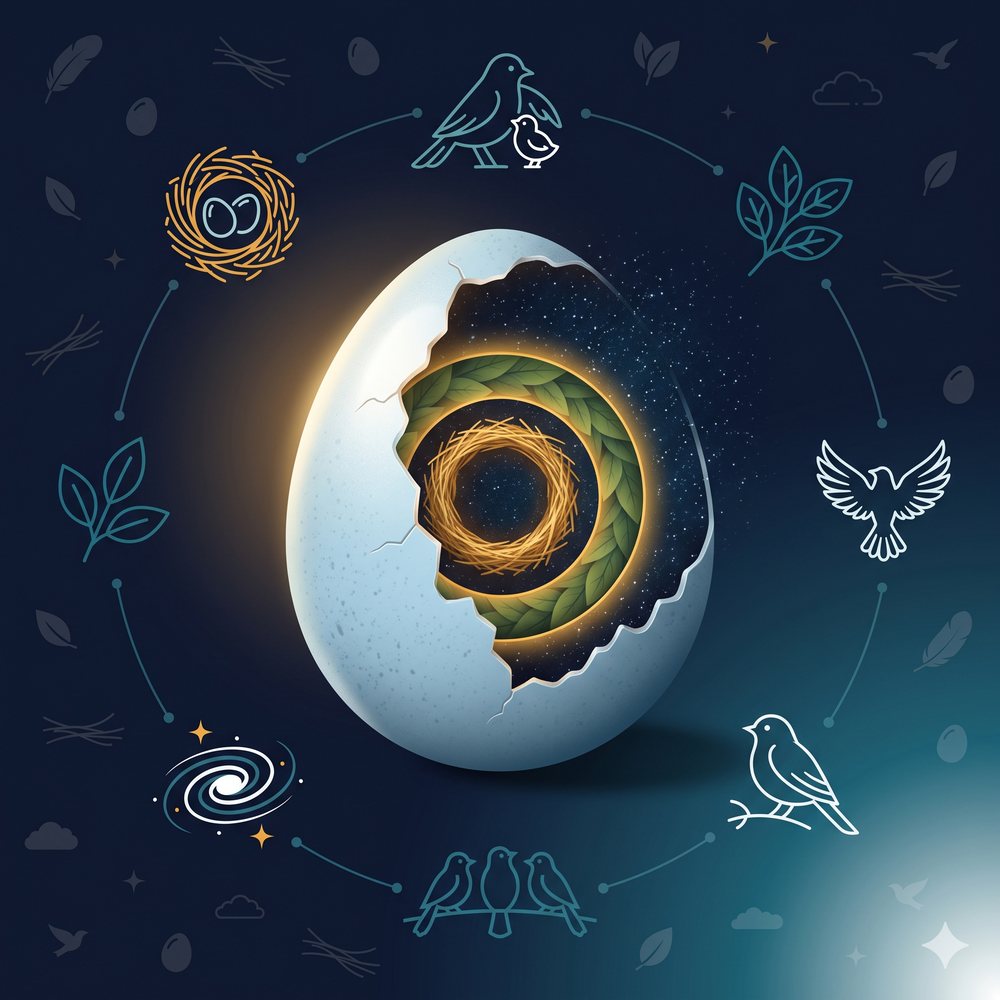
4 Stages
🥚 Stanza 1 — The First Home (Egg)
- The bird begins life inside an eggshell
- Because its surroundings are so limited, it believes the whole world is tiny, round and made of a pale blue shell
🪹 Stanza 2 — The Second Home (Nest)
- After hatching, the bird moves into a cozy straw nest, snuggled close to its mother
- Safe and sheltered, it now believes the whole world is made of straw
🌿 Stanza 3 — First Step Out (Branch)
- As its wings strengthen, the bird flutters out of the nest onto a tree branch
- The green leaves change its view: it now says the world is made of leaves
- It admits it had been "very blind" about what lay outside the nest
🌤️ Stanza 4 — Adulthood (Open World)
- Grown up, the bird flies beyond the tree, fit for "grown-up labours"
- It sees how vast the world is and humbly admits it does not know how the world is made
- Its neighbours do not know either: the mystery is shared
🏠 Homes vs Explorations
- The bird lived in two homes: the pale blue shell and the straw nest
- The branch and the flight beyond the tree are two stages of outward exploration, not new homes
🎼 Rhyme Scheme — ABCB
- Every stanza follows ABCB: the second and fourth lines rhyme
- Stanza 1: well – shell • Stanza 2: other – mother
- Stanza 3: find – blind • Stanza 4: labours – neighbours
ABCB, not AABB
🗣️ Personification
- The poet gives the bird a human voice and a thinking mind
- Words like "I thought", "I said" and "I don't know" let readers see the world through the bird's eyes
🖼️ Imagery
- Visual pictures of the pale blue shell, straw and leaves
- They show the bird's environment expanding stage by stage
🔣 Symbolism
- Blue shell — childhood innocence and confined boundaries
- Straw nest — family security, mother's care and comfort
- Flight beyond the tree — independence, growth, maturity and lifelong learning
Central Message
The more you explore, the more you learn what you don't know. Growth in knowledge brings both discovery and humility.
Quick Recall — Sprint Facts
Book & Unit
Poorvi Class 6, Unit 3 (Nurturing Nature)
Chapter
Chapter 8 — What a Bird Thought
Author
Anonymous
Structure
4 stanzas, 16 lines, ABCB rhyme scheme
Stage 1 — Egg
World is small, round and a pale blue shell
Stage 2 — Nest
World is cozy straw, snuggled with mother
Stage 3 — Branch
World is green leaves; "very blind" before
Stage 4 — Beyond the Tree
World is vast, unknown and mysterious
Number of Homes
Two: the shell and the straw nest
Voice
Personification — the bird "thinks" and speaks
Pale
Light in colour
Fluttered
Moved lightly and quickly
At Length
Eventually / at last
Labour
Hard work or adult duties
🔑 Key Terms
Pale
Light in colour; not dark or bright
Shell
The hard outer covering of an egg, the bird's first home
Straw
Dried grass or plant stems used by birds to weave a nest
Nestled
Snuggled or settled comfortably and warmly close to someone, such as the mother
Fluttered
Flew lightly with quick, short wing movements
Blind
(Figurative) Lacking awareness, knowledge or foresight about the wider world
At length
Eventually; after a period of time
Beyond
Farther away than a boundary, such as past the tree
Grown-up labours
Responsibilities and hard work of adult life, such as foraging, flying and nest-building
Neighbours
Fellow birds or creatures living in the same tree or local area
🏆 Olympiad & Challenger Edge
Limits of Knowledge (Epistemology)
Perception depends on experience. Early humans thought Earth was the centre of the universe, much like the shell and nest stage; modern space exploration shows an expanding universe with mysteries still to solve.
Intellectual Humility
Learning more reveals how much remains unknown. Admitting that neither the bird nor its neighbours know how the world is made shows humility and that knowledge is an ongoing process.
Nest Variety
Birds build specialised homes: hanging woven nests (weaver birds, orioles), tree cavities (woodpeckers, parrots) and stitched leaf nests (tailorbirds).
Brood Parasitism
Some birds, like the cuckoo, build no nest. They lay eggs in a crow's nest, handing the care of their young to another bird.
Tone Trajectory
Passive security (Stanzas 1–2) → active curiosity (Stanza 3) → humility and maturity (Stanza 4).
Experience Expands Knowledge
Stepping outside the comfort zone reveals earlier ignorance. Each new stage shows how limited the last view was.
❌ Three Homes?
Wrong. The bird lived in only two homes: the eggshell and the straw nest. Flying beyond the tree means entering the open world.
❌ Blind Means Lost Eyesight?
Wrong. "Blind" is figurative: the bird was ignorant of what lay outside its nest because leaves blocked its view.
❌ Neighbours Explained the World?
Wrong. The poem says the neighbours do not know either. The uncertainty is shared.
❌ Mixing Up the Homes
First home = pale blue shell. Second home = straw nest. Do not swap them.
✍️ Trace the Stages in Order
Egg (small, round) → nest (straw) → branch (leaves) → beyond the tree (vast, mysterious). Use words like Initially, Subsequently, Ultimately.
✍️ Link Habitat to Belief
Don't just list shell, nest, leaves, sky. Connect each place to what the bird then believes about the world.
✍️ Humility Answers
For the final stanza, explain intellectual humility: more learning shows how much is still unknown, and neither the bird nor its neighbours know how the world is made.
✍️ Symbol Answers
Blue shell = childhood innocence and limits; straw nest = security and mother's care; flight beyond the tree = independence and lifelong learning.
✍️ Analogy Answers
Eggshell : small and round :: straw nest : made of straw :: branch : made of leaves.
🏫 Personal Growth
Moving from home or a small class to middle school, new hobbies and teams shows that the world is bigger than you first thought.
🎮 Open-World Gaming
Starting in a small starter hut, stepping into a forest biome, then finding a huge unmapped world mirrors the bird's stages.
🐦 Observing Real Nests
Look at nests in neighbourhood trees: woven straw nests, tree-trunk cavity nests and stitched leaf nests of tailorbirds.
🔬 Models in Science
Early simple models, like seeing an atom as a solid ball, are replaced by better ideas later, just as the bird's early views were incomplete.
📝 RTC Details
In Reference-to-Context answers, state the exact title (What a Bird Thought) and author (Anonymous), or lose a mark.
🧸 Explaining "Nestled"
Don't write only "stayed in the nest". Say it was warm, comfortable and protected by its mother.
🎼 Rhyme Scheme
The poem is ABCB, not AABB. Check line-end pairs: well–shell, other–mother, find–blind, labours–neighbours.
📖 Synonym for "Labours"
Write "hard work" or "adult tasks", not just "work".
🔎 Evidence for "Blind"
Support the idea of past ignorance with the bird's own words, "very blind", from Stanza 3.
🔤 Stage Materials
Pale blue shell = Stanza 1. Straw = Stanza 2. Leaves = Stanza 3. Keep the order.
🧠 Quote the Shared Doubt
Support "shared uncertainty" with the line "neither do my neighbours".
Logic Chain — How Exploring Widens the World
Step 1 — Inside the Egg
Being enclosed in a pale blue shell leads the bird to believe the world is small, round and blue
Step 2 — In the Nest
Living in a straw nest with its mother leads it to feel safe and believe the world is made of straw
Step 3 — On the Branch
Fluttering out to a branch leads it to see leaves and admit it had been "very blind"
Step 4 — Beyond the Tree
Flying beyond the tree leads it to see how vast the world is and share its humble uncertainty with its neighbours
🦉
Mentor Byte
"When revising 'What a Bird Thought', focus on the progression of perspective rather than memorising lines. Draw the four stages — egg, nest, leafy branch, sky — beside the matching lines. High-scoring answers don't just list shell, nest, leaves and sky: they link each place to the bird's changing view of the world, and use words like Initially, Subsequently and Ultimately. This helps with both RTC and long-answer analysis."
For Parents
Ask your child to draw the four stages on a sheet and say in one sentence what the bird believed at each stage. Then ask what new thing they once learned that made them realise their earlier idea was too small.